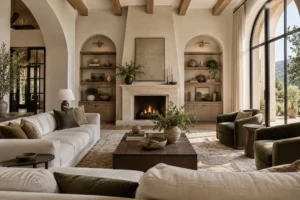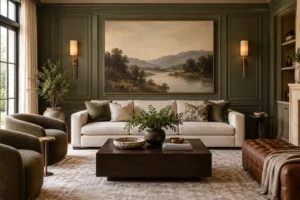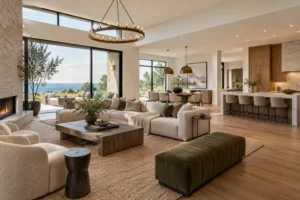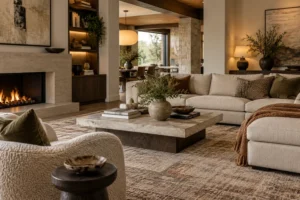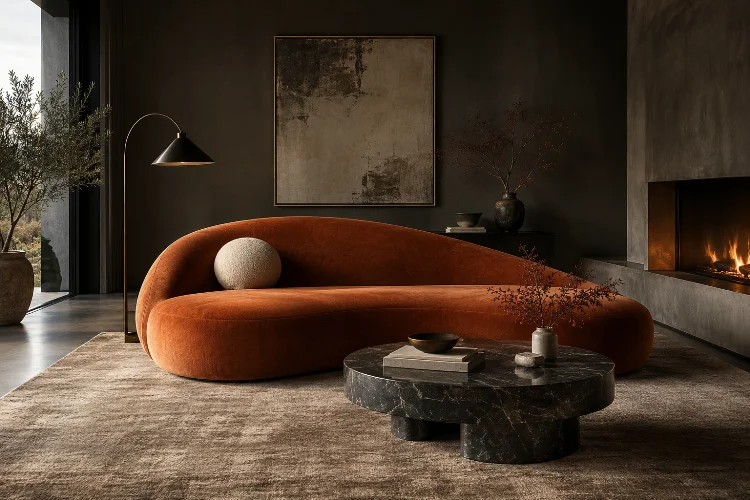
A sculptural sofa, dramatic armchair, oversized coffee table, or beautifully crafted cabinet can completely transform a room. Statement furniture gives an interior personality, creates an immediate focal point, and often becomes the piece people remember long after they leave.
The challenge begins when everything around it also demands attention.
Bold wallpaper, colorful cushions, dramatic lighting, patterned rugs, large artwork, and decorative objects can quickly turn a carefully selected hero piece into just another item competing for space.
Learning how to balance statement furniture with subtle decorative layers is therefore less about playing it safe and more about creating hierarchy.
Strong interiors usually have a clear lead element supported by quieter materials, textures, colors, and accessories. Designers frequently emphasize that when too many objects compete to become the focal point, a room loses clarity and intention.
The most sophisticated rooms allow bold furniture to stand out while surrounding details quietly make it feel at home.
Let One Major Piece Lead the Room
Before adding decorative layers, decide which piece deserves the most attention.
It might be a deep green velvet sofa, an unusually curved lounge chair, a vintage cabinet, or a monumental stone coffee table. Whatever you choose, treat it as the visual anchor rather than simply one bold item among many.
This does not mean every other piece needs to be boring.
Supporting furniture can still have personality, but its scale, color, or silhouette should generally be quieter.
ELLE Decor has long recommended allowing statement furniture to stand out by keeping surrounding pieces smaller or less ornate, while recent designer guidance similarly emphasizes giving one or two elements a leading role.
For example, a dramatic curved sofa might work beautifully with slender side tables and simple lounge chairs. The contrast actually makes the sofa feel more important.
Hierarchy is what turns a collection of attractive objects into a deliberate composition.
Build a Calm Color Foundation
Color is one of the easiest ways to control visual competition.
If your statement furniture already features a strong color, surrounding surfaces can provide a calmer foundation. Warm white, taupe, sand, soft gray, muted olive, and other restrained tones give the eye somewhere to rest.
A neutral room does not have to feel plain.
Homes & Gardens notes that neutral schemes become more interesting through layered materials, pattern, lighting, artwork, and natural finishes rather than relying only on stronger colors.
One useful guideline is the 80-20 approach, where most of the room remains relatively restrained while a smaller percentage carries stronger color or pattern. It is not a rigid formula, but it demonstrates how limiting bold elements can improve visual balance.
If you have an orange statement chair, for instance, you might repeat that tone only in a small artwork detail or cushion.
The repetition connects the scheme without turning orange into the room’s entire personality.
Add Texture Instead of More Visual Noise
When a room feels too simple around statement furniture, the instinct is often to add more color.
Texture can be a better solution.
Imagine a bold burgundy sofa sitting against warm plaster walls. Instead of adding multiple colorful patterns, you could introduce a wool rug, linen curtains, a timber side table, ceramic objects, and a softly brushed metal lamp.
The palette remains controlled, but the room gains considerable depth.
Architectural Digest describes contemporary interiors as frequently combining clean forms with layered textures, soft textiles, metal, wood, and woven materials.
The strongest combinations often rely on contrast.
Pair smooth leather with tactile wool, polished stone with matte timber, or velvet upholstery with natural linen. Statement sofas can also benefit from contrasting fabrics such as bouclé, silk, leather, or quilted textiles rather than accessories that simply repeat the same surface.
Texture allows decorative layers to remain quiet while still making the room feel rich.
Use Contrast to Strengthen the Statement Piece
It sounds contradictory, but subtle contrast can make statement furniture appear even stronger.
The trick is contrasting selectively.
A dark sculptural chair can become far more dramatic against a pale wall than it would surrounded by several equally dark pieces. Likewise, a colorful sofa becomes clearer when neighboring furniture remains restrained.
Homes & Gardens recommends pairing attention-grabbing pieces with more subdued surroundings because this contrast amplifies their impact and creates a stronger focal point.
Contrast can involve more than color.
Try pairing curved furniture with straight architectural lines, an ornate vintage cabinet with minimalist lighting, or a heavy stone coffee table with lighter upholstered seating.
These opposites create conversation without producing chaos.
The important part is making the contrast feel intentially placed. When every object introduces a different style, finish, color, and shape, the room stops feeling layered and starts feeling random.
Keep Decorative Accessories in Supporting Roles
Accessories should complete the room rather than challenge the furniture.
Start by styling areas closest to the statement piece with restraint.
If you have a sculptural coffee table, avoid completely covering its surface. A small stack of books, one ceramic object, and perhaps a simple vase may create more impact than ten unrelated accessories.
The same principle applies to cushions.
A statement sofa with a distinctive silhouette may only need a few cushions that introduce texture or subtle tonal differences. Covering the entire backrest with heavily patterned pillows could hide the very feature that made the sofa special.
Think in terms of supporting layers rather than separate focal points.
Repeating selected colors, textures, and shapes also helps accessories feel connected. Transitional interiors, for example, often gain cohesion through recurring elements of color, texture, and form even when individual pieces come from different periods or styles.
The accessories should make the statement furniture feel more established, not less visible.
Let Lighting Frame the Furniture
Lighting is one of the most overlooked ways to support bold furniture.
Instead of introducing another decorative object, use light to strengthen what is already there.
A floor lamp beside a sculptural chair can turn the arrangement into an intentional reading corner. A pendant positioned over a dramatic dining table establishes hierarchy from above, while wall lighting can create a softer backdrop around a strong sofa.
Fixtures themselves can still be interesting, but consider whether they are supposed to lead or support.
If your furniture is highly expressive, simpler lighting may be more effective. If the furniture is bold primarily because of scale rather than decorative detail, a stronger fixture may work without creating competition.
Warm pools of light also create separation.
Rather than illuminating every object equally, accent lighting can direct attention toward the furniture you want viewers to notice first.
This is especially valuable in neutral spaces, where light and shadow create depth without introducing unnecessary color.
Give Bold Pieces Enough Negative Space
Statement furniture needs breathing room.
A spectacular armchair loses much of its sculptural impact if it is squeezed between a side table, plant, basket, lamp, console, and another chair.
Negative space gives the eye time to register the shape.
Recent examples of open-plan interiors show how exposed flooring and deliberate gaps between furnishings can improve visual order and allow individual materials and furniture pieces to stand out.
This principle becomes even more important with unusually shaped furniture.
A curved chaise, architectural chair, or sculptural table often deserves more surrounding space than a conventional rectangular piece because its silhouette is part of the attraction.
Do not decorate an empty corner simply because it exists.
Sometimes the empty area beside your statement furniture is exactly what makes the composition feel luxurious.
A balenced interior depends on both objects and the space around them.
Connect the Statement Piece to the Rest of the Room
A statement item should stand out, but it should not feel completely unrelated to everything else.
One simple strategy is to repeat one characteristic from the piece elsewhere in smaller doses.
Suppose your main sofa is deep blue velvet with rounded arms. You could echo the blue through artwork and repeat the curved geometry through a rounded side table or lamp.
The room now contains subtle references to the sofa without duplicating it.
Material repetition works too.
A walnut statement cabinet might connect with a smaller timber picture frame, tray, or chair detail. Brass legs on a table could relate to a brass lamp positioned across the room.
These connections are often barely noticeable when viewed seperately, but together they make the design feel coherent.
The goal is visual conversation rather than perfect matching.
Edit Before Adding Anything New
One of the most useful advanced styling techniques is surprisingly simple: stop adding.
Once the major furniture and decorative layers are in place, step back and evaluate the room as a whole.
What do you notice first?
If the answer is the intended statement piece, the hierarchy is working. If your attention immediately jumps between five different areas, some editing may be neccessary.
Designers working with bold or maximalist furniture frequently stress the importance of ongoing editing, especially around scale, color, and competing textures.
Try temporarily removing one decorative element at a time.
You may discover that the room feels stronger without the extra cushion, side table, large plant, or second patterned object.
Statement furniture does not need endless decoration to justify its presence.
Often, the best supporting layer is simply enough restraint to let a great piece speak for itself.
Balancing statement furniture with subtle decorative layers is really an exercise in hierarchy. Start with one strong piece, then build a supportive environment through restrained color, rich texture, thoughtful lighting, repeated materials, and carefully edited accessories.
Contrast can strengthen the focal point, while negative space ensures its shape remains visible. Smaller decorative elements should connect the room without competing for equal attention.
If your interior currently feels too busy, do not immediately redesign everything. Identify the piece you want to lead, then gradually quiet the surrounding layers until that hierarchy becomes clear.
A confident room does not require every object to make a statement. When one memorable piece is given the right amount of support and space, the entire interior can feel more sophisticated.