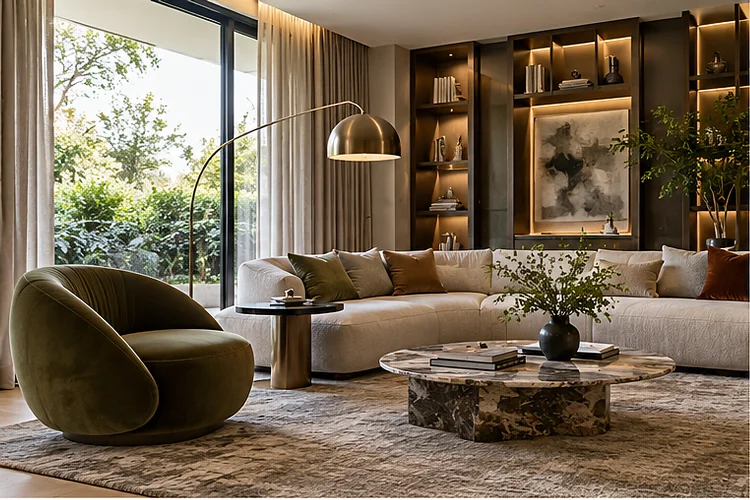
There is a big difference between furniture that attracts attention and furniture that deserves it.
A bright orange chair can certainly become the first thing you notice in a room, but a true statement piece usually has something more: an unusual silhouette, beautiful material, exceptional craftsmanship, surprising scale, or a design strong enough to influence everything around it.
Knowing how to select statement furniture for sophisticated modern homes is therefore less about finding the boldest object available and more about choosing something with lasting visual authority.
The strongest pieces can become anchors for an entire interior. Designers often recommend establishing one primary focal point and allowing quieter elements to support it, because too many competing “main characters” can make even an expensive room feel visually chaotic.
Before investing, consider how the piece relates to architecture, proportion, lifestyle, materials, and the furniture you already own.
A sophisticated choice should look impressive today without feeling like an impulsive trend purchase a year from now.
Start With the Role the Piece Needs to Play
Before shopping, decide what you actually want the furniture to accomplish.
Is it supposed to anchor the living room? Add character to an empty corner? Introduce color into a neutral interior? Or create contrast against very clean architecture?
That question immediately narrows the options.
A sculptural armchair can make sense when a room needs a smaller focal point. A dramatic dining table may be more effective in an open-plan home where the dining area needs stronger visual identity.
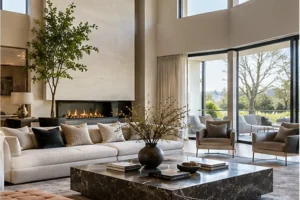
In a large living room, the sofa itself may naturally become the central piece simply because of its physical presence.
Statement furniture should also remain functional.
A spectacular sofa that nobody enjoys sitting on becomes expensive sculpture rather than successful residential design.
Recent guidance on choosing sofas emphasizes considering daily routines, household size, comfort, durability, maintenance, and long-term adaptability alongside appearance.
Sophistication comes from combining visual impact with everyday usefulness.
Get the Scale Right Before Falling in Love With the Design
Scale can make or break even the most beautiful furniture.
An enormous sculptural chair may look extraordinary in a showroom but overwhelm a compact living room. Conversely, a delicate designer chair can disappear inside a double-height space.
Interior designers consistently treat scale and proportion as fundamental to balanced rooms. Architectural Digest notes that furnishings, lighting, rugs, and accessories need to respond to the volume of the space rather than being judged only by their individual appearance.
Measure more than the available floor area.
Consider ceiling height, window dimensions, door openings, circulation routes, rugs, and nearby furniture. Even the delivery path matters when purchasing a large sofa or table.
One practical trick is to mark the proposed footprint with painter’s tape before buying. This makes the dimensions far easier to understand than simply imagining measurements from a product page.
Do not assume sophisticated interiors always require smaller, understated furniture. Sometimes one generously scaled piece creates far better balance than several undersized objects.
Look for a Distinctive Silhouette
Color gets attention quickly, but shape often gives furniture longer-lasting character.
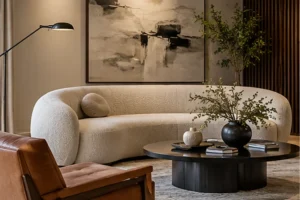
A sofa with a sweeping curved back, a chair with an architectural frame, or a dining table with an unusual pedestal can become memorable even when finished in completely neutral materials.
This is particularly useful in modern homes.
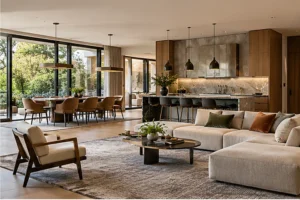
Contemporary architecture often features relatively simple backgrounds – clean walls, expansive glazing, linear cabinetry, and restrained materials. Furniture with a distinctive silhouette creates contrast against those quieter architectural lines.
A statement piece does not necessarily need decorative ornament.
In fact, some of the most successful designs are visually powerful precisely because their form is simple but unexpected.
Think about the furniture from several angles, especially in an open-plan interior where the back and sides may remain visible.
A sofa that looks beautiful only from the front might be less successful when floating in the middle of a room.
Choose a silhouette that feels distingtive without depending on novelty alone.
Prioritize Materials and Craftsmanship
A statement piece attracts closer attention than ordinary furniture, which means poor construction becomes harder to hide.
Look beyond the surface.
For upholstered furniture, consider frame construction, suspension, cushion quality, seams, fabric durability, and how the piece is likely to age. For timber furniture, inspect joinery, grain matching, finishing, edge details, and the stability of the structure.
Quality materials often become more attractive over time.
Solid wood develops patina. Good leather changes character with use. Natural stone carries variations that make each piece unique.
Architectural Digest has highlighted the value of selecting furniture and finishes with authentic materials and strong craftsmanship, particularly when the goal is creating interiors capable of aging gracefully rather than being repeatedly replaced.
Recent collectible and statement designs also continue to emphasize craftsmanship and material ingenuity as central to their appeal.
A sophisticated home benefits more from one beautifully made piece than several pieces that merely look expensive from a distance.
Decide Whether Color, Texture, or Form Will Lead
Statement furniture becomes difficult to integrate when it is dramatic in every possible way.
Imagine a huge sofa with a complicated curved shape, bright floral upholstery, decorative fringe, and highly reflective legs. It might work in an intentionally maximalist room, but it becomes much harder to balance in a restrained modern home.
Instead, decide which characteristic should lead.
A bold shape could use neutral upholstery.
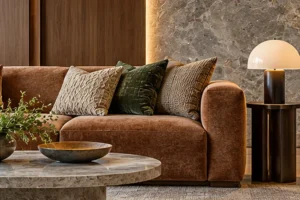
A conventional sofa silhouette could become special through deep emerald velvet or textured bouclé. A minimalist timber table might make its statement through unusual grain, substantial proportions, or sculptural joinery.
Architectural Digest’s guidance on statement sofas shows how designers use color palettes and contrasting textures to integrate bold upholstery while continuing to edit surrounding elements for visual balance.
This controlled approach gives the furniture personality without turning it into a visual gimmick.
One strong idea is usually more powerful than five competing ones.
Make Sure the Piece Talks to the Architecture
Great statement furniture should feel intentional within the building.
Look at the lines already present.
A highly angular house could benefit from curved furniture that softens the architecture. A room with arched openings might use rounded chairs or tables to repeat that geometry instead.
Material relationships matter too.
A travertine table can echo stone used on a fireplace. Dark metal furniture might connect with window frames. Warm walnut can introduce softness to a room dominated by concrete and glass.
The goal is not perfect matching.
Contrast can actually make a room more sophisticated. A vintage lounge chair can look exceptional inside highly contemporary architecture because each makes the other more noticeable.
The connection might be as simple as proportion, color temperature, material, or shape.
When furniture feels completely unrelated to its surroundings, it often looks temporarily placed. When there is a subtile architectural relationship, the same piece can appear as if it was always meant to be there.
Avoid Creating a Room Full of Statement Pieces
Once one dramatic piece works, adding another can be tempting.
Then another.
Eventually, everything becomes special and nothing feels important.
Designers generally recommend establishing a clear hierarchy. Homes & Gardens reports that one – or occasionally two – major statement elements is usually enough, with surrounding pieces serving quieter supporting roles.
ELLE Decor makes a similar point: allowing one piece to stand out often means keeping nearby furniture smaller, simpler, or less ornate.
Suppose you choose a sculptural red sofa.
The coffee table could be visually restrained, while side tables and lighting pick up smaller details from the sofa without trying to rival it.
This does not mean the rest of the room needs to be boring.
Interesting textures, art, handmade objects, and beautiful materials can still build depth. They simply need to understand their place in the hierarchy.
Think of the statement piece as the lead actor and everything else as the supporting cast.
Consider Longevity Instead of Trend Impact
A large furniture purchase is very different from buying a trendy cushion.
Replacing it can be expensive, inconvenient, and wasteful.
Before committing, ask whether you would still appreciate the piece if the current interior trend surrounding it disappeared.
Look particularly carefully at extremely fashionable colors, exaggerated shapes, or novelty materials.
That does not mean avoiding expressive design. Timeless does not have to mean beige and rectangular.
A distinctive chair can remain relevant for decades when its proportions, craftsmanship, and materials are strong enough. Iconic furniture designs often survive changing trends precisely because their identity comes from excellent form rather than temporary decoration.
Versatility matters too.
Could the chair move from a living room into a bedroom someday? Could the table work with different dining chairs? Would the sofa survive a change in wall color or flooring?
A statement piece becomes a better investment when it can evolve with the home.
Test Comfort and Function as Seriously as Appearance
Beautiful furniture still needs to support real life.
For seating, check seat depth, back angle, cushion density, arm height, and how easy it is to stand up. A deep sofa may be perfect for lounging but uncomfortable for someone who prefers upright seating.
The newest expert guidance on sofa selection similarly stresses that lifestyle should shape decisions around dimensions, upholstery, maintenance, construction, and comfort.
Dining tables require different considerations.
Check leg placement and whether chairs can move comfortably underneath. Coffee tables should relate to seating height and leave enough circulation around them.
Also think about maintenance.
A white bouclé sofa may look magnificent, but it could be a frustrating choice in a household with young children, pets, or frequent entertaining unless the upholstery is appropriately durable.
Function should never feel like an afterthought.
The best furniture makes daily life easier while still giving the room something memorable.
Leave Enough Space for the Furniture to Breathe
Statement furniture needs negative space.
A sculptural chair squeezed between a floor lamp, side table, plant, basket, and console will lose much of the silhouette that made it special.
Give important pieces room.
This is particularly relevant for furniture with unusual backs, legs, or profiles. Allow viewers to see those details rather than hiding them behind other objects.
Scale also affects how much breathing room is needed.
An oversized table or sofa naturally carries more visual weight, so crowding smaller furniture directly around it can make the room feel unbalenced.
Editing is often the final step.
After placing the statement piece, try removing one or two nearby objects. You may discover that the furniture looks considerably stronger when there is less around it.
A sophisticated interior is rarely about maximizing the number of interesting things you can fit into the room.
It is about knowing which pieces deserve space.
Selecting statement furniture for a sophisticated modern home requires more than finding something unusual. The strongest pieces combine appropriate scale, distinctive form, durable materials, craftsmanship, comfort, and enough versatility to remain relevant over time.
Start with the room’s architecture and decide what role the furniture needs to play. Then evaluate proportion, construction, material, silhouette, and functionality before committing.
Most importantly, give the chosen piece room to lead. Surround it with quieter furniture and decorative layers rather than creating unnecessary competition.
Before your next major purchase, measure the space, study the piece from every angle, and ask whether you would still want it after the current trend has passed.
Choosing more delibarately usually leads to a home that feels far more personal, polished, and enduring.