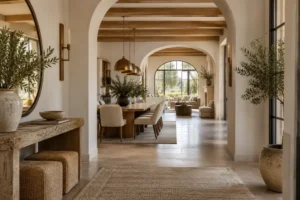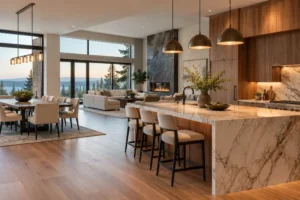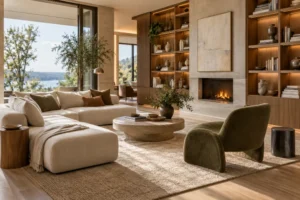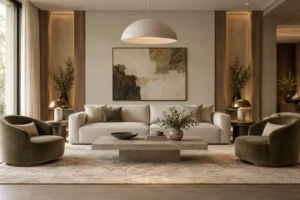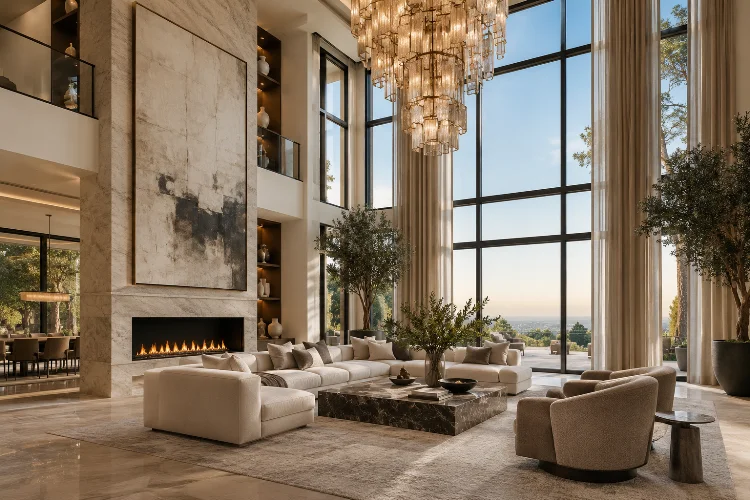
Luxury interiors are often associated with marble, custom furniture, expensive lighting, and beautifully crafted finishes. Yet a room filled with premium materials can still feel awkward if the sizes and relationships between its elements are wrong.
That is why proportion and scale in luxury residential interiors matter so much.
Scale describes how the size of an object relates to the room, the architecture, and the people using it. Proportion focuses more closely on how different elements relate to each other.
A sofa may be beautiful individually, for example, but it can still look undersized beneath a double-height ceiling.
When these relationships work, a home feels grounded, comfortable, and visually effortless. When they do not, even expensive rooms can feel unfinished.
Luxury design therefore depends less on filling a home with impressive objects and more on understanding how those objects occupy space.
From oversized lighting to carefully sized rugs, the strongest interiors use proportion as an invisible framework connecting architecture, furniture, art, and everyday living.
Understanding the Difference Between Scale and Proportion
Although the terms are often used together, they describe slightly different ideas.
Scale considers size within a broader context. A three-meter sofa may feel enormous in a compact apartment but completely appropriate inside a large open-plan residence with high ceilings.
Proportion is about relationships between elements. The same sofa could feel poorly proportioned if paired with a tiny coffee table or an extremely delicate floor lamp.
Interior design guidance commonly treats both principles as fundamental to creating rooms that feel balanced and harmonious.
In luxury residential design, this relationship becomes even more important because rooms are often larger and architectural gestures are stronger.
Large windows, double-height ceilings, wide hallways, and expansive walls create opportunities for dramatic furniture and art, but they also expose poorly scaled choices much more easily.
Good proporton helps every element feel connected rather than randomly placed.
Let Architecture Establish the First Scale
Before selecting furniture, look at the architecture.
Ceiling height, window dimensions, wall lengths, doorways, columns, fireplaces, and structural openings establish the first visual scale of a residence.
A living room with a six-meter ceiling, for example, usually needs elements capable of responding to that vertical volume. A tiny pendant and low, delicate furniture may leave too much unused visual space overhead.
The opposite applies in a room with a low ceiling. Extremely tall furniture or an oversized chandelier can make the interior feel compressed rather than luxurious.
High ceilings often support taller and more substantial design elements, while lower spaces typically benefit from furniture that acknowledges their more intimate proportions.
Luxury designers frequently use architecture as the starting point, then gradually scale furniture, lighting, and decoration around it.
This creates a visual hierarchy where everything feels connected to the building itself.
Use Furniture to Anchor Large Rooms
One common mistake in spacious homes is using too many small pieces.
Several undersized chairs, tables, and accessories can make a large living room feel fragmented. Instead of creating intimacy, the furniture starts to look as though it is floating inside a much larger architectural shell.
A few substantial pieces often work better.
Consider a generously sized sectional, two deep lounge chairs, and a broad coffee table positioned around a large rug. These elements create a stronger visual center and give the seating zone enough presence to hold its own within the room.
Current designer guidance also emphasizes that larger furniture can make open spaces feel more grounded rather than automatically overcrowded.
Depth matters as much as width.
A shallow sofa may look too delicate in an expansive room, while deeper seating creates a stronger sense of comfort and permanence.
The goal is not simply to buy the biggest furniture available. It is to choose pieces with enough visual weight to match the space while preserving comfortable circulation.
Make Rugs Part of the Furniture Composition
Rugs are one of the easiest places to spot problems with scale.
A rug that is too small can make a luxury seating arrangement look unexpectedly cheap because the furniture appears disconnected from it. The rug should visually support the composition rather than sit like a small island beneath the coffee table.
In larger living rooms, sofas and chairs often look more cohesive when their front legs – or sometimes the entire seating arrangement – sit comfortably within the rug boundary.
Large rugs can also help define separate zones inside open-plan residences.
Architectural Digest has highlighted how designers use generously scaled rugs, or even layer smaller rugs over larger foundations, to establish better proportions within expansive rooms.
The same principle applies to dining rooms.
A rug should extend far enough beyond the dining table that chairs remain comfortably supported when pulled away from it.
It sounds like a small detail, but these subtile relationships strongly influence whether a room feels professionally considered.
Scale Lighting for Architectural Impact
Lighting is functional, but in luxury interiors it is also architectural.
A large chandelier suspended within a double-height entrance can establish scale immediately. It fills otherwise unused vertical space while creating a focal point that visually connects the ceiling to the area below.
Oversized fixtures can also make large rooms feel more intimate.
Designers sometimes use substantial sculptural lighting above seating or dining areas specifically to create a stronger sense of place inside open interiors.
Small fixtures are not automatically wrong, however.
Several pendants arranged together can generate enough combined visual presence to balance a large dining table or tall ceiling. Variation in height can make the composition feel more dynamic.
The important relationship is between the fixture, the furniture beneath it, and the surrounding architecture.
A spectacular chandelier that is too small may disappear visually, while one that is excessively large can dominate everything else.
Luxury comes from getting that relationship right.
Treat Artwork as an Architectural Element
Large residential interiors often require art with enough presence to interact with the architecture.
A small framed print placed alone on an enormous wall may technically be centered, yet still look uncomfortable. The issue is usually scale rather than style.
One large artwork can establish stronger visual proportion while allowing the wall itself to remain relatively clean.
Architectural Digest notes that large-scale artwork can help establish proportion in rooms with substantial architectural features without necessarily distracting from the architecture.
Gallery arrangements offer another option.
Several smaller pieces can collectively achieve the visual weight of one larger artwork, particularly when their spacing, framing, and arrangement are carefully controlled.
Furniture should also influence art placement.
A broad sofa typically needs artwork – or an art grouping – with enough width and visual presence to relate convincingly to it. Tiny art above substantial furniture often feels disconnected.
The most successful luxury interiors treat artwork as part of the spatial composition rather than decoration added at the very end.
Use Negative Space to Make Luxury Feel Effortless
Luxury does not require filling every available surface.
In fact, one of the strongest signs of confident interior design is knowing when to leave something empty.
Negative space gives large furniture, art, architecture, and decorative objects room to breathe.
Imagine a sculptural console positioned along a long stone wall. Covering the entire surface with accessories may reduce its impact. A few carefully chosen objects with generous space between them can feel far more refined.
The same applies to furniture.
Large residences sometimes tempt homeowners to fill empty corners simply because space is available. But deliberately open areas can improve circulation and make the primary pieces feel more significant.
This restraint is especially neccessary when a room already contains strong materials such as marble, veined stone, timber paneling, textured plaster, or metallic finishes.
When architecture already provides visual interest, excessive decoration can compete with it.
True luxury often feels spacious not because the room is physically enormous, but because the design allows enough visual breathing room.
Break Scale Rules Deliberately
Perfect proportion can create harmony, but perfect predictability can become boring.
Some of the most memorable residential interiors deliberately exaggerate scale.
An enormous pendant above a dining table, an unusually tall floor lamp, oversized artwork, or a massive sculptural vase can introduce drama into an otherwise restrained composition.
Designers frequently use contrasting scale as a deliberate way to create stronger visual impact.
The key word is deliberate.
If several pieces compete to be oversized simultaneously, the room can quickly become chaotic. Usually, one exaggerated feature works best when surrounding elements remain calmer.
A huge artwork might be paired with low-profile furniture. A dramatic chandelier can sit above a relatively simple dining table.
Breaking the rule works because the rest of the room still respects it.
This controlled contrast gives high-end interiors personality without sacrificing harmony.
Keep Human Scale at the Center
Grand architecture should still feel comfortable.
A luxury home might contain soaring ceilings, monumental doors, and wide open spaces, but people experience those environments from a human perspective.
Architecture writers have explored how different scales can influence spatial experience, with larger volumes often feeling expansive while more intimate dimensions can create a stronger sense of comfort and retreat.
That is why successful homes usually contain different levels of scale.
A dramatic double-height living room may include a lower seating arrangement that creates intimacy. A huge primary bedroom might contain a reading corner positioned around a smaller lamp and chair.
These smaller moments prevent grand residences from feeling like hotel lobbies.
Luxury residential design should impress visitors, but it also needs to support breakfast, reading, conversation, relaxation, and ordinary daily routines.
Scale works best when architecture feels impressive from a distance and comfortable once you actually use it.
Proportion and scale are among the quietest but most powerful tools in luxury residential design. They determine whether furniture feels grounded, lighting suits the architecture, artwork belongs on the wall, and large spaces remain comfortable rather than empty.
The best results come from considering relationships rather than evaluating every object separately.
Start with the architecture, then establish appropriately scaled furniture, rugs, lighting, and art. Preserve negative space and introduce exaggerated scale only when there is a clear reason for it.
Most importantly, keep human comfort at the center of the composition.
Before purchasing another statement piece, step back and study how your existing elements relate to one another. A few delibarate adjustments in size and placement can often create a more luxurious result than simply adding more expensive objects.